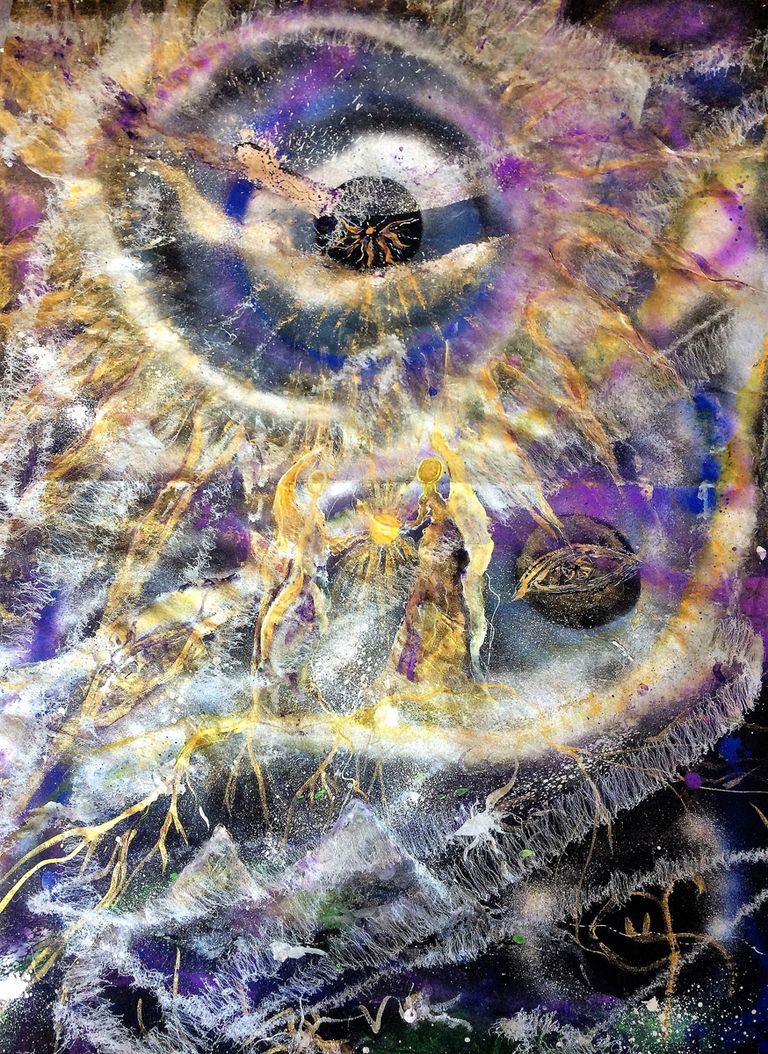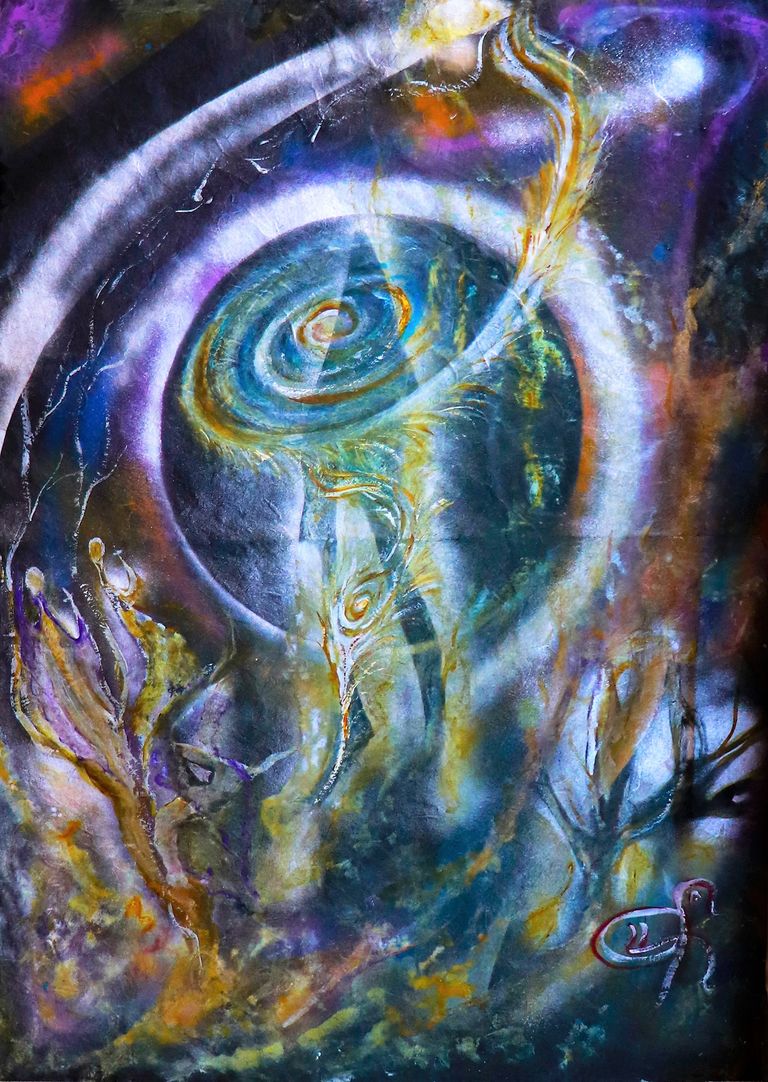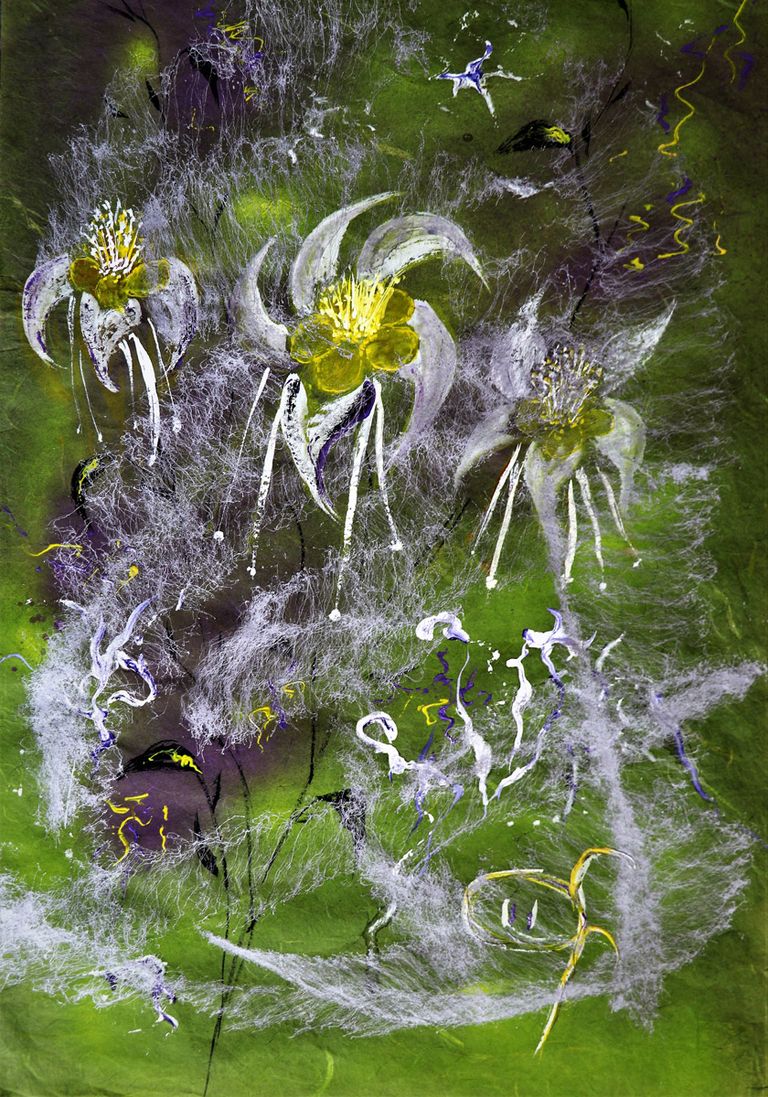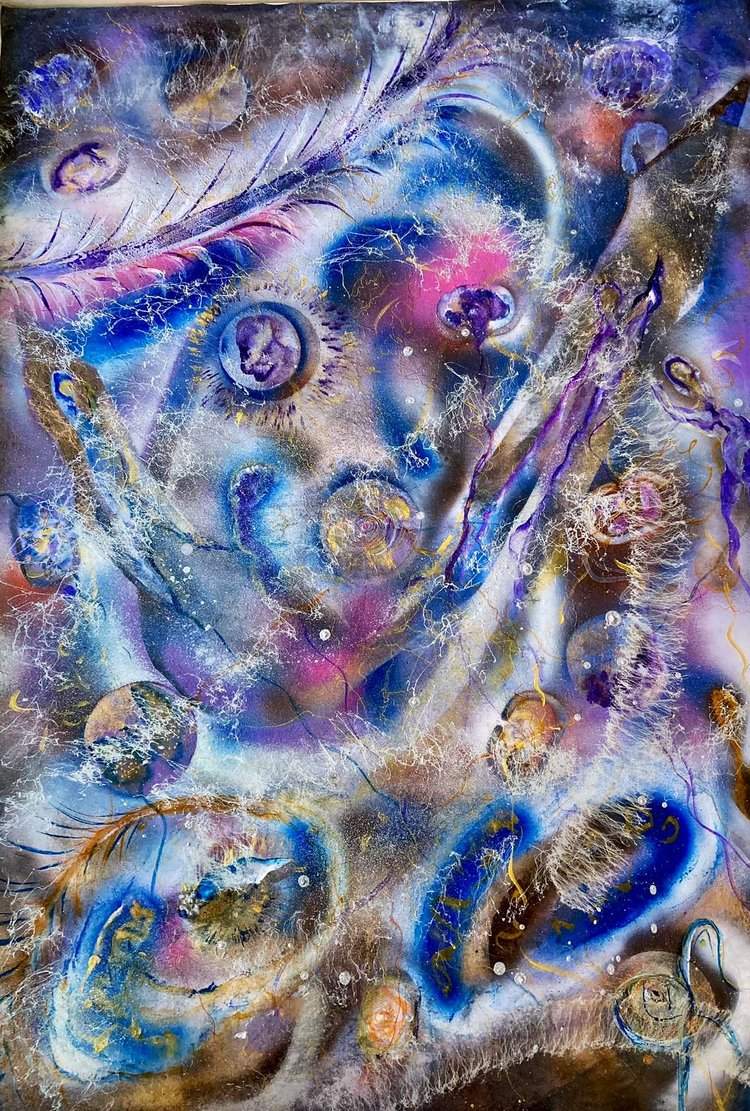
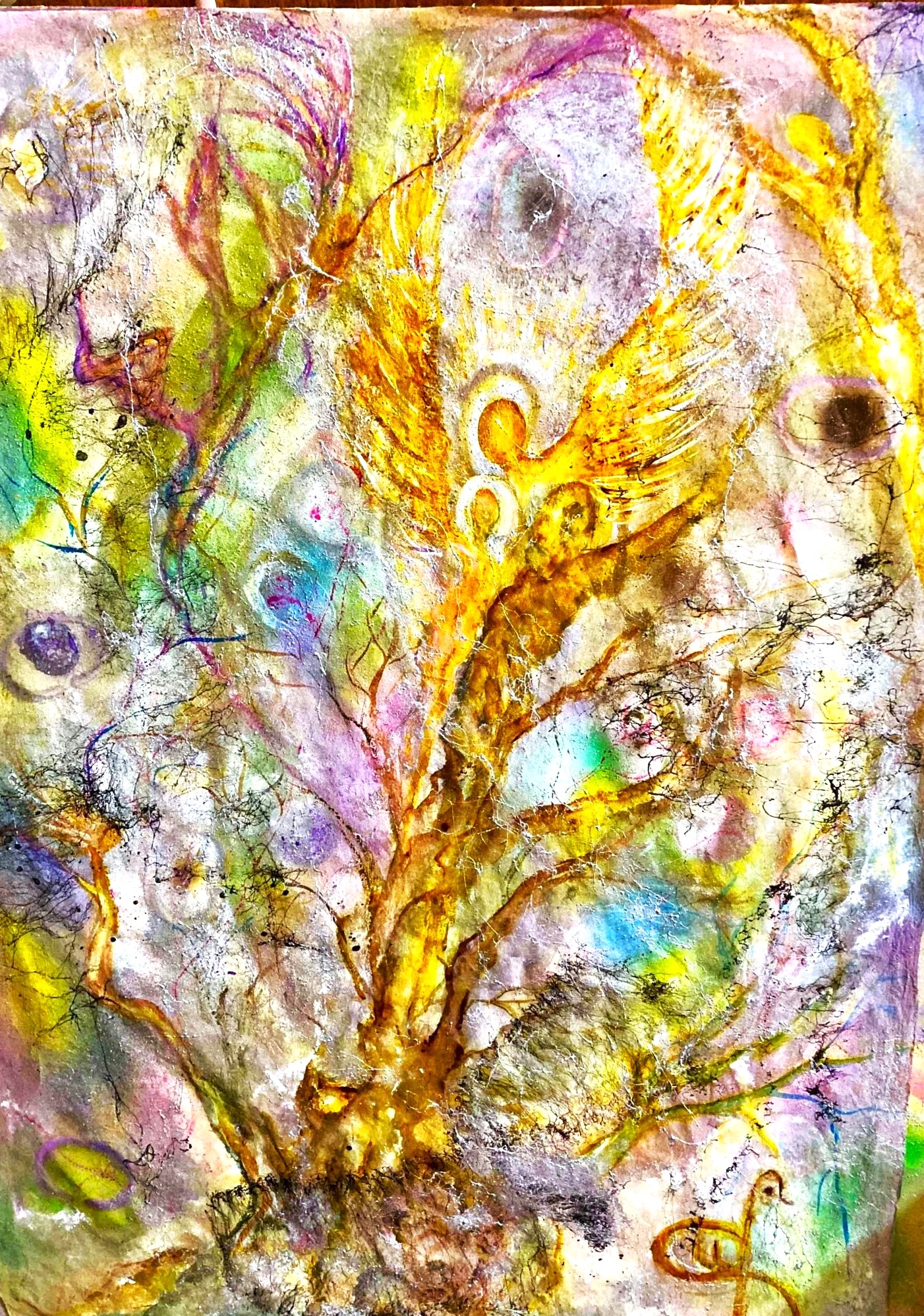
A Celestial Feast Above the City of Angels
- rice paper, pigment
- 2023
- 20 inx 28 in
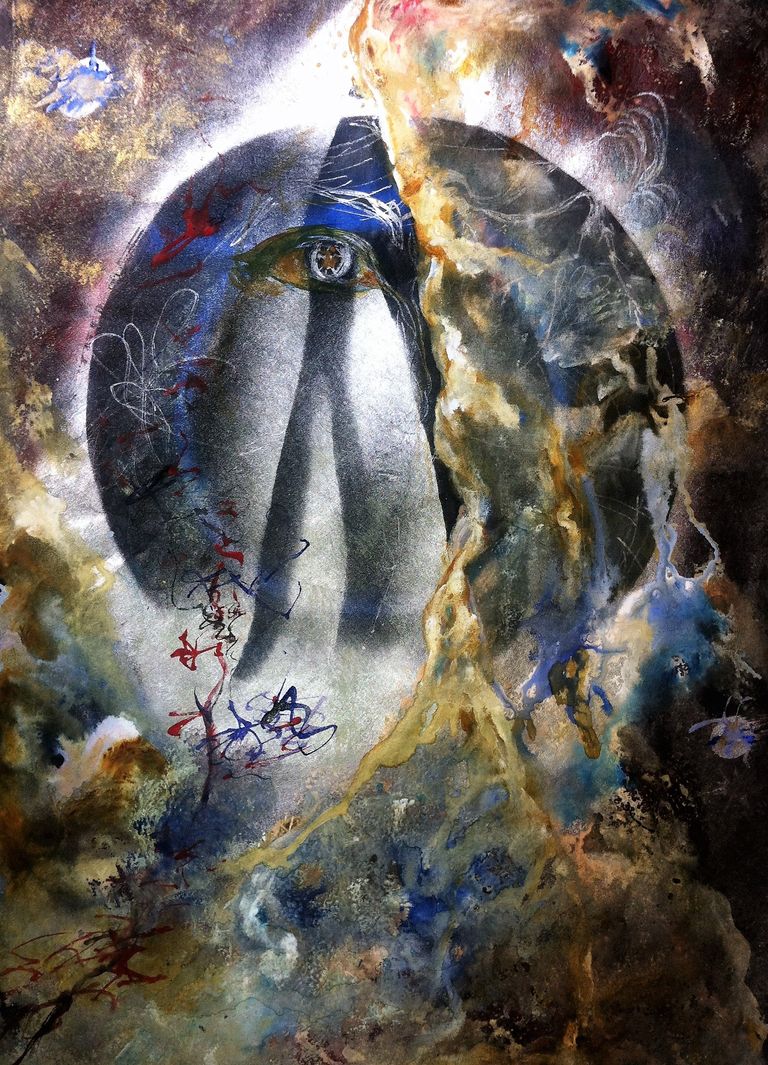
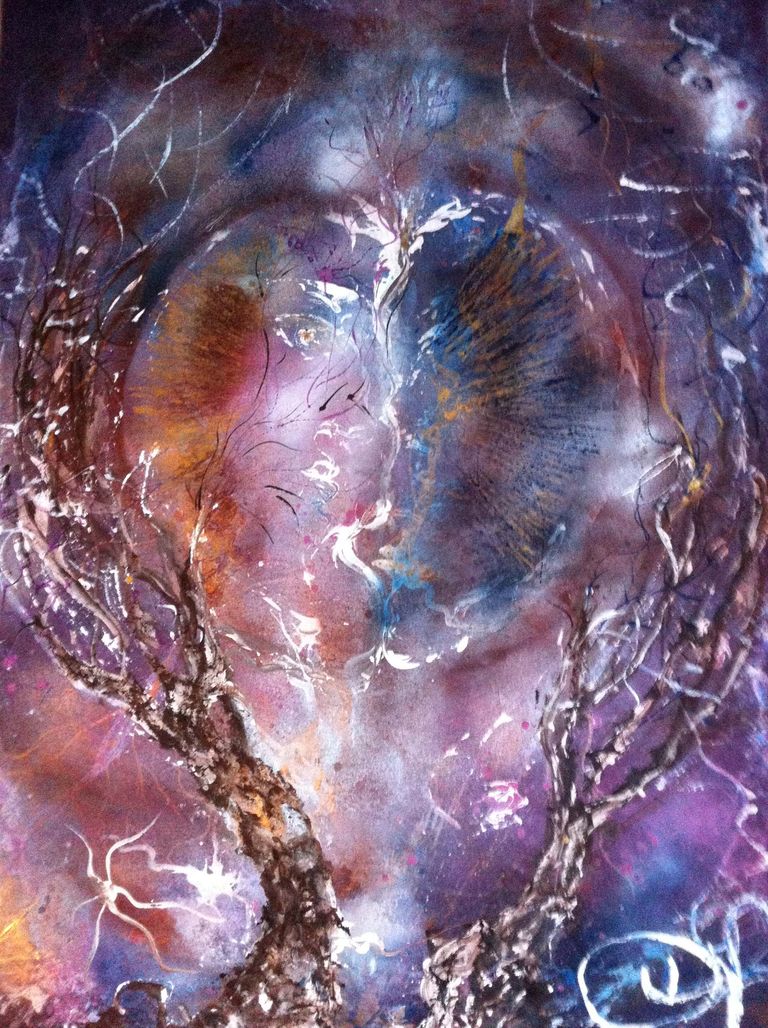
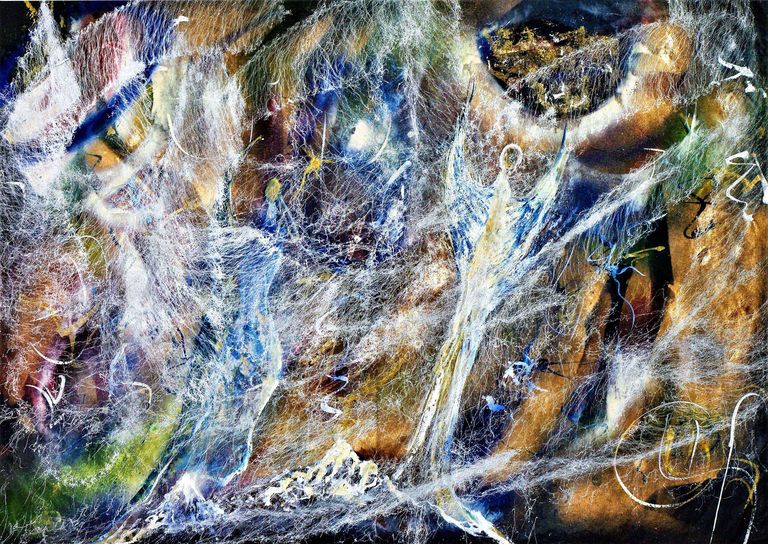
In “A Celestial Feast Above the City of Angels” Angels of Love, autumn unfolds not as a season of nature but as a state of the soul entering a period of quiet ripening. It is a time when the world sheds its outer brightness to reveal a deeper radiance—something invisible in the abundance of summer light. Autumn teaches us to look inward, and it is within this inner space that the Angel of Love appears. His golden energy rises like a tree unafraid of cold or change. Branches of light reach upward, as if trying to hold the warmth of the departing season while simultaneously accepting the inevitability of transition. In this movement lies wisdom: love does not fade with the shifting of time; it merely transforms, becoming more subtle, mature, contemplative. Autumnal hues—purples, ochres, deep greens—dissolve within the composition like traces of lived emotions. They do not vanish but turn into a soft glow surrounding the Angel. This glow is not a flash of passion but a quiet fire that warms during a period of inner cooling. Here, love is not an emotion but a state of being, capable of enduring any season. The Angel of Love becomes a guardian of transition. He appears at the moment when a person stands on the threshold between past and future, between what has been and what is still forming. Autumn makes this threshold visible, and the Angel helps to cross it without fear, preserving the warmth of the heart. Thus, the painting becomes a philosophical metaphor: love is a light that does not depend on the time of year. It does not fade with the last leaf but grows deeper, purer, wiser. Autumn merely reveals its true nature—the ability to remain an inner source of warmth as the world prepares for silence.
Price on request
More by this artist